Posted on 18/10/2026
Bromley council rules for flower displays in Beckenham: a practical guide for homes, businesses, and events
If you are planning flower displays in Beckenham, the Bromley council rules for flower displays in Beckenham can feel a bit more fiddly than they first look. A planter outside a shop, a tasteful window display, a wedding entrance, or even a simple memorial arrangement can all raise the same questions: do you need permission, what is actually allowed, and how do you avoid complaints? Truth be told, most people just want their flowers to look lovely without causing a problem. Fair enough.
This guide breaks the topic down in plain English. You will learn how local expectations usually work, what to check before placing displays on the pavement or near a frontage, how to stay on the safe side with public space and neighbourhood amenity, and what good practice looks like in everyday use. We will also cover practical examples, common mistakes, and a useful checklist so you can move forward with a bit more confidence.
Practical takeaway: if your flowers stay fully on private land, do not create an obstruction, and do not interfere with safety, access, or neighbours, you are usually in a better position than if the display spills into public space. The details still matter though.
Table of Contents
- Why Bromley council rules for flower displays in Beckenham Matters
- How Bromley council rules for flower displays in Beckenham Works
- Key Benefits and Practical Advantages
- Who This Is For and When It Makes Sense
- Step-by-Step Guidance
- Expert Tips for Better Results
- Common Mistakes to Avoid
- Tools, Resources and Recommendations
- Law, Compliance, Standards, or Best Practice
- Options, Methods, or Comparison Table
- Case Study or Real-World Example
- Practical Checklist
- Conclusion
- Frequently Asked Questions
Why Bromley council rules for flower displays in Beckenham Matters
Flower displays sound simple, but they sit in a space where aesthetics, safety, access, and local expectations overlap. In Beckenham, that can mean the difference between a display that adds charm and one that becomes a nuisance. A neat planter by a cafe entrance is one thing. A display that narrows a pavement, hides a sign, or gets blown over on a windy afternoon is another altogether.
Bromley council rules matter because they help protect the public realm. That includes footways, visibility for road users, access for pedestrians with mobility needs, and the general look and feel of the street. You do not need to panic, and you do not need to overcomplicate it. But you do need to think ahead.
For local businesses, the stakes are practical as well as visual. A flower display can help a shopfront feel welcoming, seasonal, and cared for. Done badly, it can trigger complaints, create maintenance headaches, and even lead to removal. Nobody wants to spend money on a lovely arrangement only to have it moved two days later. That is not a fun surprise.
For residents, the issue often comes down to private versus public space. A display in a front garden or on a sill is usually straightforward. A display on a shared path, near a boundary, or on land that may be public highway is where things become more sensitive. And yes, the boundary line is not always obvious at a glance. Streets can be trickier than they look on a sunny morning.
There is also a wider community angle. Beckenham has a strong neighbourhood feel, and flower displays can contribute to that. But councils tend to balance beauty with practical use. If a display makes life harder for pushchairs, wheelchairs, older pedestrians, delivery drivers, or emergency access, it may not be viewed kindly. Reasonable people can disagree about the details, but the core idea is simple: flowers should add to the street, not take over.
How Bromley council rules for flower displays in Beckenham Works
The exact process depends on where the flowers are placed, how large the display is, and whether it affects public land or public safety. In many cases, the council's concern is less about the flowers themselves and more about the location and impact. That is the bit people often miss.
Here is the practical way to think about it:
- Private property: displays inside a home, business, or private forecourt are usually a lower-risk area.
- Shared or semi-public space: communal entrances, shared forecourts, and apartment frontage need more care.
- Public highway or pavement: anything extending into or onto a footway is much more likely to need checking first.
- Temporary displays: wedding flowers, seasonal decorations, or short-term memorial tributes still need sensible placement.
- Permanent or semi-permanent features: planters, troughs, and fixed decorative structures usually deserve extra scrutiny.
That does not mean every pavement planter is automatically forbidden. But it does mean you should not assume it is fine just because it looks neat. Councils tend to focus on obstruction, visibility, trip hazards, maintenance, and whether the display is reasonable for the setting.
There is a useful rule of thumb here: if a display could be knocked over, narrow the walkway, block access to a doorway, or create a blind spot near a road crossing, it deserves another look. A quick two-minute check can save a lot of back-and-forth later. The wind in south-east London has a habit of testing people's optimism anyway.
In practice, many people ask the wrong question. They ask, "Can I put flowers outside?" A better question is, "Where exactly can I place them without affecting access, safety, or the appearance of the street?" That small shift makes decision-making much clearer.
Key Benefits and Practical Advantages
Following the Bromley council rules for flower displays in Beckenham is not just about avoiding trouble. Done well, it helps your display work harder for you. A compliant display is usually more durable, more respectful of the space around it, and more likely to stay where you put it.
- Fewer complaints: neighbours and passers-by are less likely to object if the display is tidy and unobtrusive.
- Better safety: lower risk of trips, blocked access, or unstable items falling in wind or rain.
- More reliable presentation: a well-planned arrangement is easier to maintain and keeps its shape longer.
- Stronger local goodwill: businesses especially benefit when their frontage feels inviting rather than cluttered.
- Less wasted spend: flowers that stay in place and comply with local expectations are less likely to be removed or damaged.
There is also a softer benefit. When a display feels considered, it tends to make the whole frontage look more professional. That matters if you run a cafe, salon, estate agency, shop, or venue. Even a modest arrangement can lift the tone of a place. You can often feel the difference before you can explain it.
For events, the advantage is peace of mind. Wedding flowers, sympathy arrangements, and seasonal installations are emotional enough without adding uncertainty about local permissions. If you know the rules and position things carefully, you can focus on the day itself. Which is the point, really.
Who This Is For and When It Makes Sense
This topic applies to a surprisingly wide group of people. If you live, work, or organise events in Beckenham, there is a good chance it affects you in some way. The bigger question is not whether it applies, but how directly it applies.
- Homeowners and tenants: especially those considering window boxes, front-path planters, hanging baskets, or tribute flowers near the frontage.
- Independent retailers and cafes: where shopfront appeal matters and pavement space can be tight.
- Florists and event planners: who need to place flowers for weddings, memorials, or corporate occasions.
- Property managers and landlords: responsible for shared entrances and common areas.
- Community groups: organising seasonal planting, local beautification, or remembrance displays.
It makes sense to review the rules whenever your display:
- moves from private land toward a pavement or street edge
- is taller than a small tabletop arrangement
- could be affected by weather
- uses stands, frames, or fixed structures
- might attract foot traffic or viewing stops
If you are unsure, err on the side of checking first. That is especially true for anything near road junctions, narrow pavements, busier pedestrian routes, or shop entrances. Beckenham streets can be busy at the best of times, and a display that feels quaint at 9am may feel awkward by 5pm when the street picks up.
Step-by-Step Guidance
Here is a sensible way to approach flower displays without overcomplicating it. It is a simple process, but it helps to be methodical.
- Work out exactly where the display will sit. Is it fully on private property, on a shared path, or close to the public footway? Draw the boundary in your head before you do anything else.
- Measure the usable space. Leave enough room for people to pass comfortably. If the area already feels tight, a display is probably too large.
- Check the view from every angle. Stand where a pedestrian, cyclist, driver, or visitor would stand. Can the display be seen clearly? Does it block signs, windows, or access points?
- Choose stable containers and weather-resistant placement. Lightweight items can move in wind or become messy after heavy rain. A lovely basket on a breezy day can suddenly become a runaway basket. Not ideal.
- Keep the layout tidy and proportionate. Oversized arrangements often cause the most friction, even when they are beautiful.
- Consider maintenance. Who will water, clean, or reposition the display? A display that looks great on day one can become scruffy quickly if nobody owns it.
- Check whether any permission is needed. If there is any chance the display uses public space or affects access, make enquiries before you install it.
- Monitor and adjust. After installation, revisit the display in different weather and at busier times of day.
That last point matters more than people realise. A display can seem perfectly fine in a quiet moment and then suddenly become a trip risk once a crowd arrives or a delivery comes through. A small adjustment now and then makes a big difference.
Quick clarification: a display that is temporary is not automatically exempt from concern. Temporary items can still obstruct, fall, or upset neighbours. The council will usually care about impact, not just duration.
Expert Tips for Better Results
In our experience, the best flower displays are the ones that look calm and deliberate. They do not shout for attention. They fit the setting. That is usually what people respond to, even if they cannot put their finger on why.
Here are a few practical tips that make a real difference:
- Use scale wisely. A small frontage rarely suits a large arrangement. Keep the proportions in line with the space.
- Choose colours that work with the building. Neutral facades can handle stronger colours, while busy shopfronts often look better with softer combinations.
- Keep walkways visually open. Even if a display technically fits, a crowded look can feel obstructive.
- Pick containers with weight or anchoring in mind. This is especially useful for exposed spots.
- Think seasonally. Summer displays may need more watering; winter displays need more protection from wind and damp.
- Make access the first design decision. Beauty comes after safety, not before it.
A small trick that works well is to photograph the display from the other side of the street and from doorway height. You will spot problems much faster that way. Sometimes the arrangement looks elegant up close but oddly heavy from a distance. Funny how that happens.
Another good habit is to keep one person responsible for upkeep. Not a committee. Not "someone will probably water it." One person. Displays survive on boring routines, and boring routines save beautiful things from slowly fading into neglect.
Common Mistakes to Avoid
A lot of avoidable issues come from small oversights rather than bad intentions. The display itself may be lovely, but the placement or upkeep lets it down. Here are the errors we see most often.
- Assuming the pavement is fair game. Public space is not the same as private frontage.
- Forgetting about clearance. A display that leaves too little room can become a real irritation.
- Using unstable pots or stands. These can tip, slide, or crack in bad weather.
- Blocking sight lines. This matters near driveways, junctions, and crossings.
- Ignoring maintenance. Drooping flowers, spilled soil, and broken containers quickly change the feel of a frontage.
- Overcrowding the area. More flowers is not always better. Sometimes it just looks busy.
- Assuming one good example means yours will be allowed. Each location is different, and that is where many people go wrong.
One of the sneakiest mistakes is emotional overreach. A display can start with a clear purpose and then slowly grow because each addition seems harmless. A bit more there, another basket here, a taller piece over there. Before long, the arrangement has become a little too much. You know the feeling.
If you only remember one thing from this section, remember this: a display should be easy to explain in one sentence. If you need four sentences to justify it, the design probably needs simplifying.
Tools, Resources and Recommendations
You do not need a big toolkit to handle flower displays well, but a few simple items can help enormously. These are practical, everyday tools rather than fancy extras.
- Measuring tape: useful for checking widths, gaps, and placement against entrances or walkways.
- Camera or phone photos: take before-and-after images so you can spot clutter or obstruction.
- Weather-resistant containers: especially helpful for outdoor arrangements in exposed spots.
- Weighted bases or secure fixings: useful where wind is an issue.
- Watering can or hose access: important for keeping plants fresh and presentable.
- Simple cleaning kit: a brush, cloth, or bin bag is often enough to keep a frontage tidy.
If you are buying flowers for a longer display, it helps to think about care and longevity as much as style. A good florist will often steer you toward arrangements that hold shape well and suit the environment. If you want to explore local ordering options, you can look at the Beckenham florist service, browse flower delivery in Beckenham BR3, or find a simple arrangement among the full flower collection.
For care advice after installation, the guidance on flower care is a useful starting point. And if you are planning something more formal, such as a wedding frontage or event arrangement, the wedding flowers collection can help you think through scale and style.
Law, Compliance, Standards, or Best Practice
While this article is not a legal opinion, the basic compliance picture is fairly clear: flower displays should not create a hazard, obstruct access, or misuse public space. That principle sits behind most council responses, even where the exact process varies.
In practical terms, best practice usually includes:
- keeping displays on private land where possible
- avoiding obstruction of footways, doorways, driveways, and sight lines
- using stable, well-maintained containers
- ensuring the display does not create trip risks or falling hazards
- checking permission before placing anything on public land or shared property
For businesses, there is a reputational angle too. Customers notice whether a frontage feels cared for. They also notice when it feels cluttered or difficult to navigate. That is especially true in compact high street settings. A few centimetres of extra clearance can matter more than people expect.
It is also worth being careful with anything attached to walls, railings, or street furniture. Even if it seems decorative, fixed items can involve different consent or maintenance concerns. If in doubt, ask before installing. Better a slightly delayed display than a removal notice later on.
Summary box: the safest approach is simple. Keep the display tidy, stable, proportionate, and clearly non-obstructive. If it crosses into public space, check first. If it might be seen as temporary decoration, still treat it like something that must be safe, manageable, and considerate.
Options, Methods, or Comparison Table
Different types of display suit different settings. A shopfront, a home entrance, and an event space will not all need the same approach. The table below gives a practical comparison.
| Display type | Best for | Main advantage | Main risk | Best practice |
|---|---|---|---|---|
| Window box | Homes and small frontages | Stays mostly within private property | Water runoff, weight, and maintenance | Secure fixing and regular watering |
| Potted entrance display | Shops and cafes | Easy to refresh seasonally | Can narrow access if oversized | Leave clear walking space |
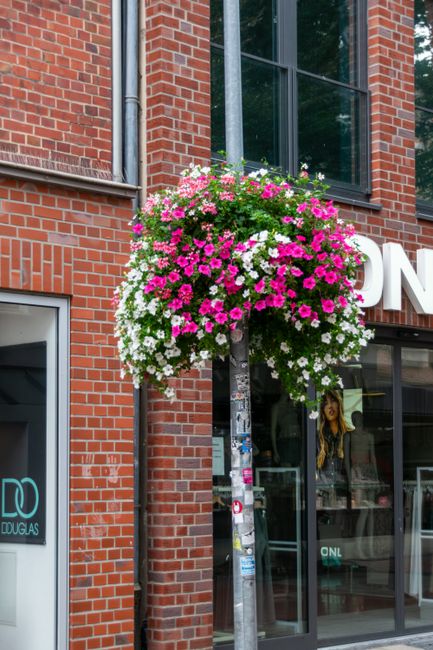
| Hanging basket | Small decorative impact | Creates height without using floor space | Wind exposure and falling debris | Use strong fixings and check regularly |
| Temporary event flowers | Weddings and functions | Flexible and stylish | Can drift into access routes during setup | Install and remove promptly |
| Large statement arrangement | Special promotions | High visual impact | Can overwhelm the frontage | Keep proportions controlled |
The right option is usually the one that suits the space without asking too much of it. A small terrace outside a local business may need a restrained planter, while a larger venue entrance can handle something more dramatic. The setting decides more than the trend does.
Case Study or Real-World Example
Imagine a small cafe in Beckenham deciding to brighten its frontage for spring. The owner wants colour, but the pavement is busy and the doorway opens quite close to the edge of the path. The first idea is a line of three large planters, which would look lovely in a photo. On the ground, though, they leave less room than ideal and feel a bit cramped when customers queue near the entrance.
So the layout is changed. One heavier planter is placed just inside the frontage, a smaller arrangement sits by the window, and a hanging display adds colour above eye level. The effect is calmer, more open, and easier to maintain. People still notice it. Maybe even more so, because it looks intentional rather than crowded.
That kind of adjustment is very common. The first concept is rarely the final one. And that is fine. Good displays are often the result of a small rethink, not a grand gesture. A little less on the pavement, a little more in the vertical space, and suddenly everything feels better.
The same logic applies to memorial flowers and wedding displays. A short-term arrangement can be beautiful and respectful without interfering with access or looking overdone. The trick is to match emotion with practicality. Not always easy, but it is doable.
Practical Checklist
Use this checklist before placing or ordering any flower display in Beckenham.
- Have I confirmed whether the flowers are on private land, shared land, or public space?
- Does the display leave enough room for normal pedestrian movement?
- Could it block a doorway, window, driveway, sign, or crossing view?
- Is the container stable enough for wind, rain, and everyday knocks?
- Will someone be responsible for watering and upkeep?
- Does the arrangement fit the size of the frontage?
- Could it cause a complaint from neighbours or nearby businesses?
- Do I need permission before placing it where I want it?
- Have I checked how it looks from the street, not just from inside the building?
- Is the display still safe and tidy after 24 hours, not just on installation day?
If you can answer yes to the right questions and no to the risky ones, you are usually on much safer ground. Simple, but useful. A bit of discipline saves a lot of faff later.
Conclusion
Getting the Bromley council rules for flower displays in Beckenham right is mostly about common sense, good placement, and respect for the space around you. The flowers themselves are rarely the issue. It is where they sit, how they are secured, and whether they help or hinder everyday movement that matters most.
For homes, the safest route is usually to keep displays on private land and well maintained. For businesses, it is worth thinking like a pedestrian as well as a shop owner. For events, the best display is the one that looks beautiful without creating stress. That is the sweet spot.
If you are planning a display now, take a minute to measure, check the boundary, and think through the practicalities before you order. It is a small effort, but it makes everything easier. And honestly, that little bit of care tends to show in the finished result.
Get a free quote today and see how much you can save.
When a display feels thoughtful and well judged, it does more than please the eye. It makes the whole place feel looked after, and that kind of detail lingers.
Frequently Asked Questions
Do I need permission to put flower displays outside my Beckenham property?
Usually it depends on where the display sits. If it stays fully on private land, permission may not be an issue. If it extends onto a pavement, shared area, or public space, you should check first because access and safety become much more important.
Can I place planters on the pavement outside my shop in Beckenham?
Not automatically. Pavement planters can create obstruction or maintenance issues, even when they look attractive. The key questions are whether pedestrians still have enough room, whether the display is stable, and whether any consent is needed.
What counts as a flower display in council terms?
It can include planters, window boxes, hanging baskets, seasonal arrangements, event flowers, and decorative floral installations. The council is usually less interested in the label and more focused on the impact on public space, access, and safety.
Are temporary flowers for a wedding treated differently from permanent displays?
Sometimes, but not always enough to ignore the rules. Temporary arrangements may be more flexible, but they still need to avoid blocking paths, entrances, or views. Short-term does not mean risk-free.
How wide should a path be around a flower display?
There is no single answer that fits every location. The practical test is whether people can pass comfortably, including wheelchair users, pushchairs, and delivery items. If it feels tight to you, it probably feels tight to everyone else too.
Can flowers on my windowsill cause a problem?
Yes, if they are unstable, drip water where it creates a hazard, or overhang public space in a way that could fall or obstruct. Most windowsill displays are low risk, but they still need a sensible check.
What happens if a flower display is considered unsafe?
It may need to be moved, altered, or removed. The usual concern is whether it creates obstruction, trip risk, or a hazard to pedestrians or road users. Safer, simpler arrangements are usually easier to keep in place.
Do I need to think about neighbours before setting up a display?
Yes, and not just because it is polite. Neighbours may be affected by scent, water runoff, bees, clutter, or visibility. A quick conversation can avoid needless friction later.
Is a larger display always better for a business frontage?
No. Bigger can easily become cluttered or intrusive. In many cases, a smaller but well-placed display looks more polished and is easier to maintain. Less is often more, which is annoying to hear but true.
Where can I find flowers suited to a compliant local display?
Look for arrangements that suit the size and purpose of your space. For straightforward options, you can browse best flower delivery in Beckenham BR3, check affordable flower options, or choose from florist choice arrangements when you want something balanced and practical.
What is the safest approach if I am unsure about the rules?
Keep the display on private land, make it smaller rather than larger, and check whether any permission is needed before installation. If in doubt, ask rather than guessing. That simple habit saves time, money, and a fair bit of hassle.